
La Palma beaches
The largest beaches on La Palma
Vamos a la playa: La Palma offers both supervised beaches and small, secluded coves for swimmers and water-sports enthusiasts. Depending on the location, your towel may lie on black sand, pebbles or rock. The sand is dark because of the island's volcanic origin, not because it is dirty, and the beaches are often quieter than the large resorts of Tenerife or Gran Canaria. Always follow lifeguard instructions and beach flags: yellow warns of dangerous waves or currents, red means swimming is prohibited, and green indicates favourable conditions.
The 2021 Tajogaite eruption transformed parts of the west coast in particular. Puerto Naos is accessible again but remains under permanent CO₂ monitoring, while the former Los Guirres beach was covered by lava. Access, closures and services can therefore change, so always respect barriers, flags and current official advice.
Playa de Puerto Naos
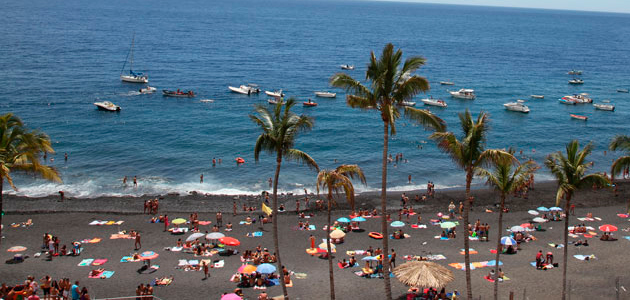
Puerto Naos lies on La Palma's sunny west coast and has one of the island's best-known black-sand beaches. Olivine crystals give the volcanic sand a subtle green tint in places. Palm trees provide shade, while the seafront promenade links the beach with restaurants, terraces and accommodation. Much of the access is suitable for visitors with reduced mobility.
After the 2021 Tajogaite eruption, the coastal village remained closed for a long period because of unusually high CO₂ concentrations. The beach reopened to the public in 2024 and activity is gradually returning to Puerto Naos.
Playa de Tazacorte
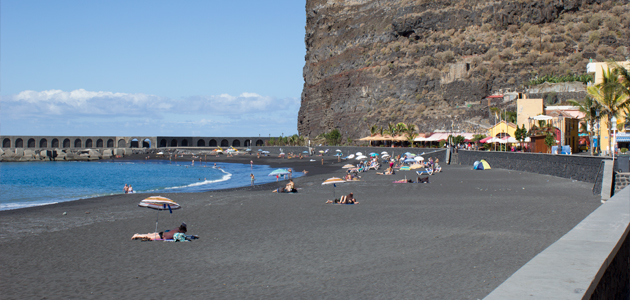
Puerto de Tazacorte beach lies at the mouth of the Barranco de las Angustias and is one of the island's longest black-sand beaches. A breakwater reduces currents and waves, making it particularly popular with families. The immediate area offers a promenade, accessible entrances, parking, a bus stop, restaurants and cafés. It is also one of the most appealing places to watch the sunset on La Palma's west coast.
The former Playa de los Guirres, also known as Playa Nueva
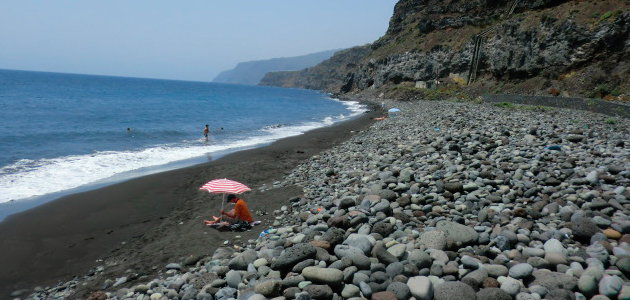
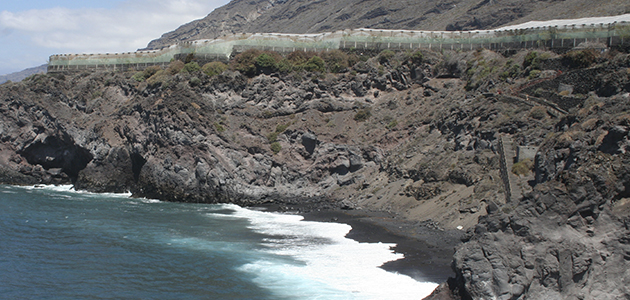
The photograph and older guides show the former Playa de los Guirres, also known as Playa Nueva or Playa del Volcán. This black-sand beach between Tazacorte and Puerto Naos was popular with surfers and once had a small beach restaurant. That description is now part of the island's recent history.
In November 2021, lava flows from Tajogaite reached this coast and covered the beach and its restaurant. The eruption formed a new lava delta with very young stretches of coastline. The former Playa de los Guirres is therefore no longer an accessible bathing beach; the new land remains under scientific observation and must not be entered without explicit authorisation.
Playa de Charco Verde
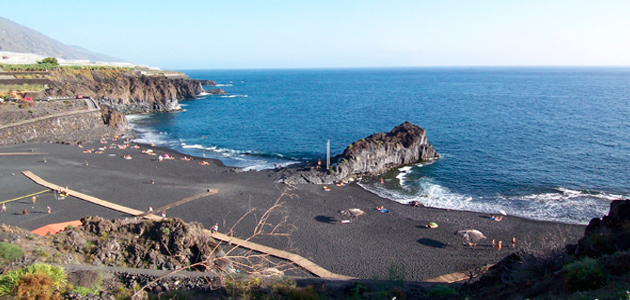
Charco Verde is a cove about 150 metres long, located south of Puerto Naos and framed by cliffs and banana plantations. Its black sand, generally moderate waves and sheltered setting make it popular with families. The beach is accessible by road and has parking, ramps and walkways, outdoor showers, toilets and a small beach bar with a terrace. Some services, including public transport, may be seasonal.
Playa de La Zamora and Playa Chica
Below Las Indias on La Palma's south-west coast lie Zamora Grande and Zamora Chica, two black-sand coves separated by a rocky outcrop. Steps descend from the car park above the cliff to the sea. The volcanic surroundings and sheltered setting make La Zamora a popular place to unwind, while suitable swells also attract surfers. There is no permanent lifeguard service, and currents and breaking waves can be strong, so particular care is required.
Playa Punta Larga
Punta Larga is a small black-sand bay just over 100 metres long on the Fuencaliente coast. Three lava tongues flowing into the sea formed the beach, which is now protected by a breakwater. Steps provide access to the water, while parking, public transport and places to eat are available nearby. The beach is not supervised. Although waves are often moderate, families should always check current conditions and keep children close by the water.
Playa Echentive
Echentive beach, also known as Playa Nueva, was formed by the 1971 eruption of the Teneguía volcano. This black beach, around 300 metres long, lies in a young lava landscape near the island's southern tip and is accessible by car despite its wild appearance. Natural seawater pools among the rocks offer some shelter from the waves. The open beach is unsupervised and the Atlantic can be rough, so swimming is advisable only when conditions are suitable.
Playa del Faro
Playa del Faro lies below Fuencaliente's old and new lighthouses, a short walk from the salt pans and marine reserve. The small cove combines black sand and pebbles, with a sheltered section also used by fishing boats. A visit can easily be combined with the lighthouses and salt pans, but the beach has few services and no permanent lifeguard cover. Check wave conditions and local advice before swimming.
Playa de la Salemera
La Salemera lies on the south-east coast of Villa de Mazo beside a small traditional fishing settlement. Next to the dark beach is a large seawater pool protected by the coastal rocks and popular with families. Places to eat are available nearby, and the lighthouse forms part of the bay's distinctive setting. Wind and Atlantic waves can still be strong, so conditions in the open sea should not be confused with those in the sheltered pool.
Playa de los Cancajos
Los Cancajos lies on the east coast between the airport and Santa Cruz de La Palma. A volcanic-rock breakwater protects this black-sand bay and often keeps the water calmer. Its varied underwater scenery makes the beach particularly attractive for snorkelling and diving. Facilities include accessible entrances, parking, public transport, showers, toilets and sunbed and sunshade rental. Restaurants, hotels and apartments are close by.
Playa de Bajamar
Bajamar beach belongs to the municipality of Breña Alta and lies immediately south of Santa Cruz de La Palma, between the marina and the Risco de la Concepción Natural Monument. This black-sand beach, around 700 metres long, is popular with local residents throughout the year. It offers accessible entrances, parking, showers and toilets, with cafés and restaurants nearby. Its east-coast position makes it an especially attractive place to watch the sunrise.
Santa Cruz de La Palma beach
Santa Cruz de La Palma beach opened in April 2017, returning black volcanic sand to the Avenida Marítima on the site of the historic Caleta del Varadero. It is now an easily accessible family beach with showers, toilets, sunshade rental and sports areas for beach volleyball and football. Windsurfing, kitesurfing and wingfoiling are also practised here. Restaurants, shops and the historic city centre lie directly across the promenade.
Playa de los Nogales
Los Nogales beach lies below the cliffs of Puntallana, combining black sand, green slopes and the open Atlantic. A path with steps descends from the car park, making the climb back moderately demanding. Nogales is visually striking and attracts experienced surfers, but strong currents and breaking waves make swimming dangerous. There is no lifeguard service. When the sea is unsettled, the beach is best enjoyed from a safe position on shore.
Playa Bujarén in Garafía
The small natural beach of Bujarén lies below the cliffs of Garafía. It can only be reached on foot along a steep, demanding path or from the sea. Black sand may collect in the cove during summer; at other times it is mainly stony.
This is not a conventional walk to the beach. Sure footing, suitable shoes, enough water and a realistic assessment of the climb back are essential. The remote cove is unsupervised, and currents and surf can surprise even experienced swimmers. Avoid the descent and swimming in uncertain weather or heavy seas.
Puerto Espíndola beach and Charco Azul natural pools
Two different bathing areas lie close together on the coast of San Andrés y Sauces. Puerto Espíndola is a small dark cove beside the fishing harbour. A few minutes away, Charco Azul offers several natural seawater pools protected from the direct surf by coastal rocks. Good access, sun decks, showers, toilets and places to eat make the complex particularly convenient for families. During heavy seas waves can still overtop the barriers, so closures must always be respected.
La Fajana natural pools
The natural pools of La Fajana lie on the Barlovento coast and consist of several basins continually refreshed with Atlantic seawater. Rock barriers shelter the bathing areas from the direct surf, while different depths and an accessible section make the complex suitable for a wide range of visitors. Showers, toilets, sun terraces and a restaurant complete the facilities. The pools may close for safety during heavy seas even when the water inside appears calm.