
Sailing around La Palma
Sailing between the trade winds and the Atlantic
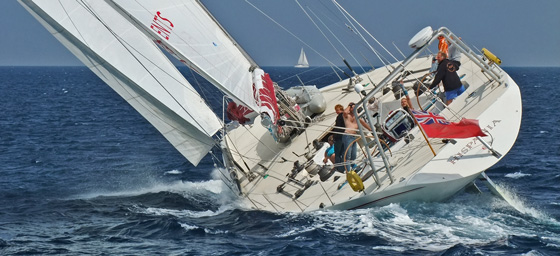
The Canary Islands are rightly regarded as an appealing sailing area. North-east trade winds blow through much of the year, temperatures remain mild and winter still brings many bright days. Around La Palma, however, this does not automatically mean gentle cruising. The island is exposed to the Atlantic, and wind, ocean swell and currents can turn a sunny coastal day into a demanding passage.
From the water, the Isla Bonita reveals a perspective that is difficult to imagine from land. Cliffs fall towards deep blue water, ravines cut across the slopes, and pine forest and cloud rise above dark lava fields towards the summit ridge. Even a short coastal sail combines navigation with a powerful landscape experience.
Beginners are best placed aboard a boat with an experienced skipper, learning manoeuvres, wind and waves step by step. Anyone intending to command a vessel needs suitable experience, the required qualifications and careful planning. On the Atlantic, sunshine is no substitute for seamanship or an up-to-date forecast.
A coastline that demands planning
La Palma's mountains strongly reshape the wind. The trade wind may blow hard on the windward side, while the lee produces calm patches, descending gusts and renewed acceleration zones. Ocean swell can also wrap around the island and reach a coast that appears sheltered. Conditions on the eastern and western sides may therefore differ considerably.
Natural bays and genuinely protected anchorages are scarce. Much of the coast drops steeply and deep water lies close inshore. An attractive beach or a windless patch is not automatically a suitable anchorage: swell, holding ground, depth, distance from shore and possible wind changes all need to work together.
Neighbouring islands also look closer on a chart than they feel at sea. A passage to La Gomera, El Hierro or Tenerife crosses open water and zones of changing wind and sea state. These legs call for an experienced crew, a properly equipped vessel, sufficient time and a robust alternative plan.
Two ports on two coasts
Puerto de Tazacorte lies on the sunny west coast and is the main base for many maritime activities in the Aridane Valley. Its inner leisure harbour is well sheltered, although a strong Atlantic swell can make the approach demand particular care. Construction or operational changes may affect access and individual services; Puertos Canarios publishes current information.
On the eastern side, Marina La Palma occupies a basin within the Port of Santa Cruz de La Palma. The berth is beside the historic centre and provides a practical base for crew changes, provisioning or time ashore. Ferries, cruise ships and port traffic, together with radio and harbour instructions, require attention on entry and departure. The Port Authority provides contacts and service details.
Contacting either harbour before arrival is advisable. Berth availability, tariffs, permitted vessel sizes and services can change. Harbour authority instructions, current notices to mariners and direct radio directions always take precedence over older cruising guides or travel reports.
Before casting off
Preparation involves more than wind strength and sunshine. Check the AEMET marine forecast, wave height and direction, visibility, possible calima, harbour notices and the forecast for the return leg together. When doubt remains, a later departure usually makes for a better memory.
Lifejackets, working communications, sun protection, water and safety equipment suited to the passage belong aboard. Anyone prone to seasickness should prepare before the Atlantic begins to work. On a charter, qualifications, insurance cover, deposit and permitted cruising area should all be clarified before handover.
Dolphins, whales, turtles and seabirds may appear along the route. Keeping a respectful distance, adjusting course and speed smoothly and not pursuing wildlife protects both the animals and the crew. A sighting is a gift, not an entitlement to the closest possible photograph.
With suitable preparation, sailing off La Palma is a memorable experience: sometimes sporting in the trade wind, sometimes gentle in the shelter of the mountains. That very changeability makes the area interesting. Sailors who know their limits and make decisions according to the sea rather than the holiday schedule will experience the island at its most vivid.