
Las Tricias to Buracas walk
Rural charm in the north-west
The walk begins in the quiet hamlet of Las Tricias in north-west La Palma. Stone-paved paths, old threshing floors, gardens and houses built from dark volcanic rock reveal a rural world that remains particularly well preserved here. Between the ravines, the Atlantic is almost always present on the horizon.
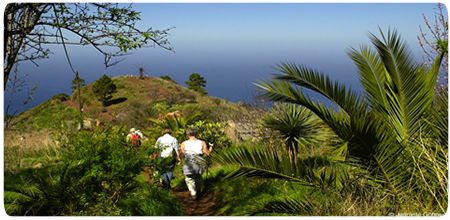
Terraced fields and the restored old grain mill recall the former importance of cereal farming. Almond blossom brightens the landscape towards the end of winter, followed by wildflowers on unused plots, while fruit trees, palms and traditional Canarian architecture accompany the route throughout the year.
Dragon trees and the caves of Buracas
Below Las Tricias, the path descends towards the Caboco de Buracas. Its group of old dragon trees is among the most striking on the island. Their branching crowns rise between almond trees, terraces and deeply cut slopes, giving this part of the walk its unmistakable atmosphere.
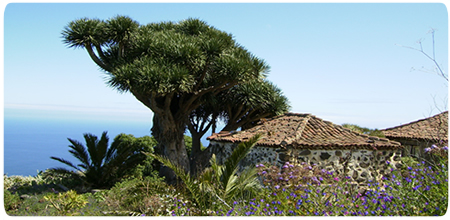
Buracas also preserves a cave settlement and rock sites of archaeological interest. They bear witness to the Benahoaritas, La Palma’s pre-Hispanic inhabitants, and to later forms of rural life. This is not an open-air museum: paths, caves and buildings should be visited with respect for residents, private property and cultural heritage.
Route and practical advice
The official circular Las Tricias–Buracas walk forms part of stage four of the GR 130. It is approximately 4.8 kilometres long, takes around three hours and is rated easy. Even so, it descends and climbs again on uneven paths with some steep sections. Sturdy footwear and water are advisable, and mobile coverage cannot be relied upon.
Check the current route description and map at Visit La Palma. At weekends, the outing can be combined with the Puntagorda farmers’ market, which sells food and crafts from the surrounding area. Confirm its opening times before travelling.